
The Conflict Between Freedom and Slavery
The FallExplores Clamence's evolving relationship with the concepts of freedom and slavery, from a champion of freedom to an advocate of slavery.
increasing Bearing strength in each event
 decreasing
Bearing strength in each eventdecreasingThe Freedom Fighter
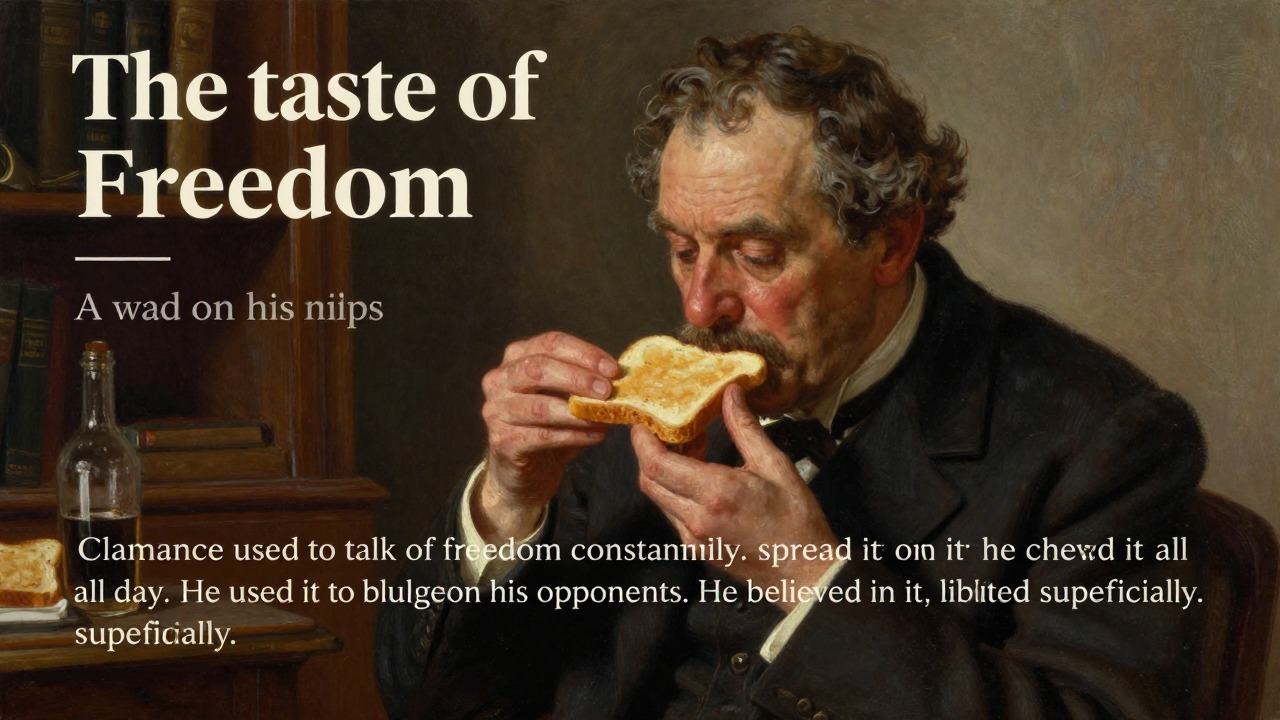
The taste of freedom
A word on his lips
Clamence used to talk of freedom constantly. He spread it on his toast, he chewed it all day. He used it to bludgeon his opponents. He believed in it, albeit superficially.
The naïve use
He defended freedom two or three times, taking risks, but he didn't know what it meant. For him, freedom was a reward, a decoration. He hadn't faced its heavy burden.
The Fear of Freedom
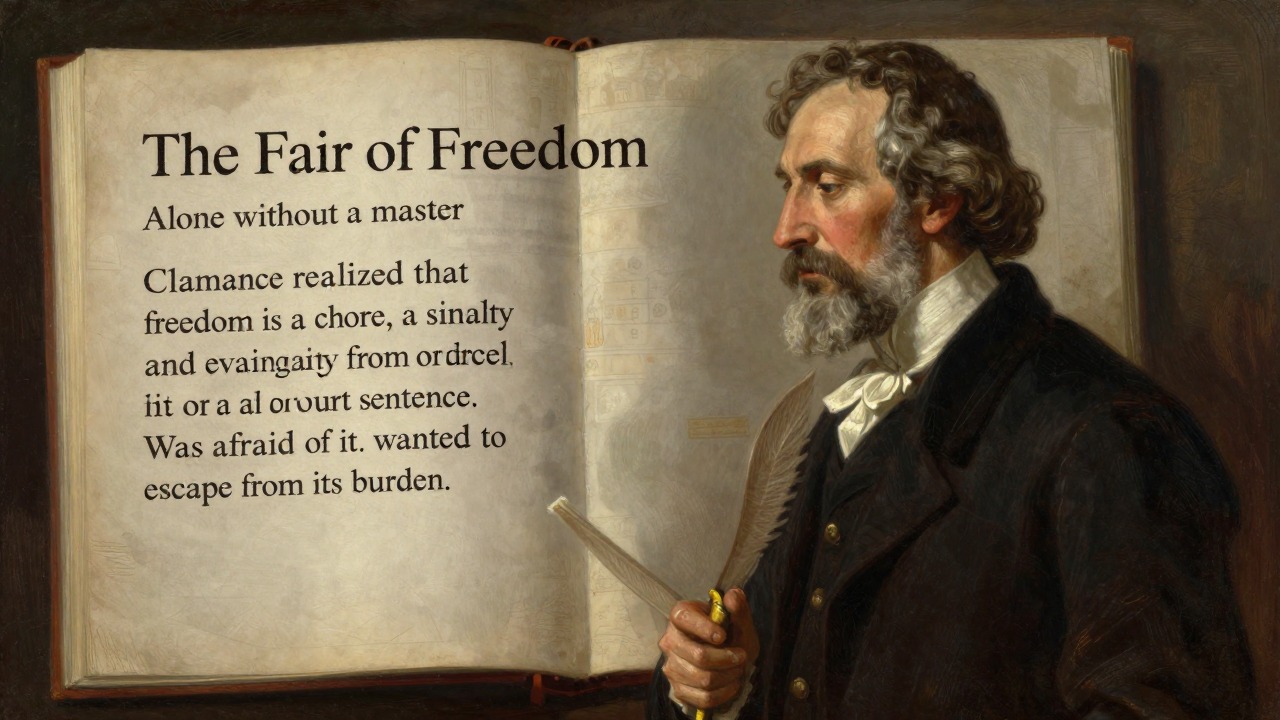
The weight of liberty
Alone without a master
Clamence realized that freedom is a chore, a solitary and exhausting race. At the end of all freedom is a court sentence. He was afraid of it. He wanted to escape from its burden.
The desire for a master
He began to think that one must choose a master, since God is out of style. He longed for someone to take the place of heaven's law. Freedom was too heavy to bear.
The Advocate of Slavery
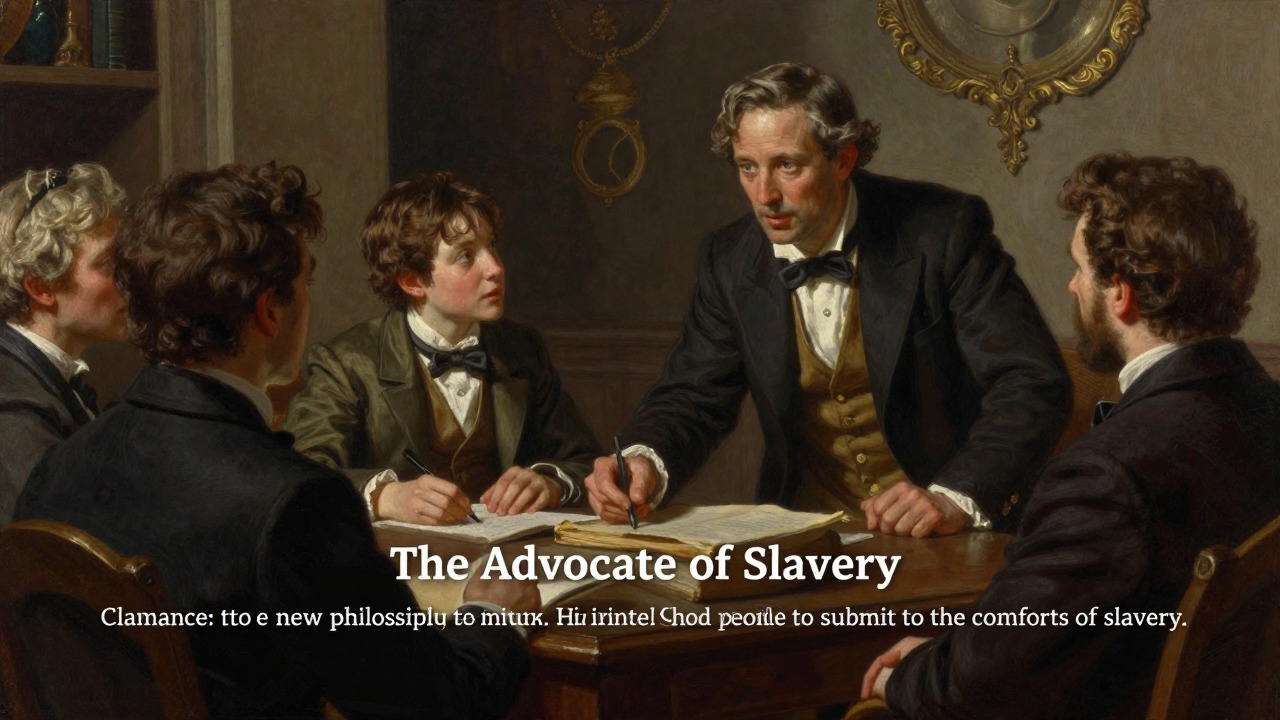
The new philosophy
Slavery as a solution
Clamence now preaches submission to authority. He invites good people to submit to the comforts of slavery. He presents it as true freedom. He has become an enlightened advocate of slavery.
The collective guilt
He argues that when we are all guilty, that will be democracy. Slavery is collective, whereas death is solitary. He wants all together, on their knees, heads bowed. The conflict between freedom and slavery is resolved in favor of the master.
During his Parisian years, in his rhetoric
After the laugh, during his self-examination
In his judge-penitent role, in Amsterdam
